




Exercice 1 – Complétez les formes manquantes
Trouvez le prétérit (20 verbes)
| Infinitif | Prétérit (Input) | Participe Passé |
|---|---|---|
| cost | cost | |
| drive | driven | |
| do | done | |
| blow | blown | |
| eat | eaten | |
| beat | beaten | |
| catch | caught | |
| be | been | |
| begin | begun | |
| bring | brought | |
| bite | bitten | |
| drink | drunk | |
| break | broken | |
| draw | drawn | |
| buy | bought | |
| cut | cut | |
| choose | chosen | |
| come | come | |
| become | become | |
| build | built |
Trouvez le participe passé (20 verbes)
| Infinitif | Prétérit | Participe Passé (Input) |
|---|---|---|
| keep | kept | |
| hurt | hurt | |
| feel | felt | |
| forgive | forgave | |
| hide | hid | |
| fall | fell | |
| hold | held | |
| have | had | |
| go | went | |
| fight | fought | |
| get | got | |
| hear | heard | |
| fly | flew | |
| forget | forgot | |
| grow | grew | |
| find | found | |
| hit | hit | |
| freeze | froze | |
| hang | hung | |
| give | gave |
Exercice 2 – Choisissez la bonne forme (QCM)
15 questions sur des situations quotidiennes
1. She ___ her keys on the table last night.
💡 Prétérit de leave (left).
2. I ___ badly last night.
💡 Prétérit de sleep (slept).
3. Have you ever ___ a ghost?
💡 Present Perfect 'seen' après l'auxiliaire have.
4. She has ___ a new car.
💡 Present Perfect de buy (bought).
5. Yesterday, I ___ to the supermarket.
💡 Prétérit 'went' pour une action terminée yesterday.
6. We ___ a delicious pizza for dinner.
💡 Prétérit de eat (ate).
7. He has ___ all his money.
💡 Present Perfect de spend (spent).
8. The dog ___ the postman.
💡 Prétérit de bite (bit).
9. Did you ___ that noise?
💡 Après DID, on garde la base verbale hear.
10. My brother ___ his arm playing football.
💡 Prétérit de break (broke).
11. He ___ me a nice birthday present.
💡 Prétérit de give (gave).
12. I ___ the bus this morning.
💡 Prétérit de take (took).
13. Who ___ this cake? It's delicious.
💡 Prétérit de make (made).
14. They ___ to Paris two years ago.
💡 Prétérit de fly (flew).
15. I have ___ my homework.
💡 Present Perfect de do (done).
10 questions format TOEIC (vocabulaire professionnel)
1. We have ___ a new software solution.
💡 Present Perfect de choose (chosen).
2. The CEO ___ about the new strategy yesterday.
💡 Prétérit de speak (spoke).
3. The company ___ the deal last Friday.
💡 Prétérit de lose (lost).
4. Costs have ___ significantly this quarter.
💡 Present Perfect de rise (risen).
5. I ___ the report on your desk this morning.
💡 Le prétérit de put est invariable : put.
6. She ___ the team effectively during the crisis.
💡 Prétérit de lead (led).
7. Have they ___ the invoice yet?
💡 Present Perfect de pay (paid).
8. We have ___ the contract to the client.
💡 Present Perfect de send (sent).
9. He ___ the position because of the salary.
💡 Le prétérit de quit est quit.
10. The meeting ___ at 9:00 AM sharp.
💡 Prétérit de begin (began).
Exercice 3 – Conjuguez dans des phrases complètes
15 phrases de la vie quotidienne
1. I
about you all day. (think)
2. We
to the beach last summer. (go)
3. She
10 kilometers yesterday. (run)
4. They
all the orange juice. (drink)
5. He has
too much chocolate. (eat)
6. I
everything he said. (understand)
7. Have you
your keys? (find)
8. The birds have
away. (fly)
9. He
up and left the room. (stand)
10. He has
his password. (forget)
11. We
in the ocean. (swim)
12. She
a beautiful dress at the party. (wear)
13. I
the answer to the question. (know)
14. I have already
this movie. (see)
15. She
a letter to her friend yesterday. (write)
15 phrases en contexte professionnel
1. The team has
the proposal. (send)
2. He
to the headquarters. (drive)
3. The bank
us the money for the project. (lend)
4. He
manager after two years. (become)
5. We
the client on Tuesday. (meet)
6. I
to send this email earlier. (mean)
7. Sales
by 10% last month. (fall)
8. We have
the entire budget. (spend)
9. I have
the meeting minutes. (write)
10. I
him about the delay. (tell)
11. The company
a new headquarters. (build)
12. They have
1000 units so far. (sell)
13. She
the employee of the year award. (win)
14. We
a conference call yesterday. (hold)
15. Have you
the memo? (read)
Exercice 4 – Complétez un texte suivi
Récit de voyage
"Last summer, I (go) to London.
The flight (take) only one hour.
When I arrived, I (catch) a taxi to the hotel.
The first day, I (see) the Big Ben and I
(take) many photos.
I (meet) some nice people in a pub where I
(drink) a typical beer.
I also (buy) some souvenirs for my family.
Unfortunately, I (lose) my map, so I
(have) to ask for directions.
I (speak) to a policeman who
(tell) me the way.
It (be) a great trip and I
(feel) very happy.
I (sleep) very well on the flight back."
Email professionnel
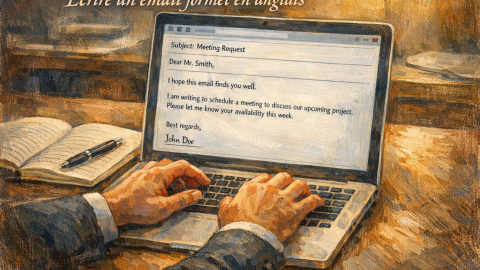
"Dear Mr. Smith,
I am writing to update you on the Project Alpha. Last week, we (hold) a meeting with the stakeholders. We (show) them the prototype and they (give) us positive feedback. However, we (find) a small bug in the system. Our team (deal) with it immediately.
Since then, we have (make) significant progress. We have (build) the new feature and we have (run) several tests. The results have (be) promising. I have (put) the detailed report in the attachment. We have (keep) the costs within the budget.
Best regards,
The Manager"
I am writing to update you on the Project Alpha. Last week, we (hold) a meeting with the stakeholders. We (show) them the prototype and they (give) us positive feedback. However, we (find) a small bug in the system. Our team (deal) with it immediately.
Since then, we have (make) significant progress. We have (build) the new feature and we have (run) several tests. The results have (be) promising. I have (put) the detailed report in the attachment. We have (keep) the costs within the budget.
Best regards,
The Manager"
Exercice 5 – Traduisez du français vers l’anglais
10 phrases affirmatives simples
FR : Elle a chanté une chanson.
FR : J'ai vu ce film hier.
FR : J'ai connu cet homme.
FR : Ils ont bu de l'eau.
FR : Il est allé à l'école.
FR : Nous avons pris le bus.
FR : Elle a fait un gâteau.
FR : Tu as oublié ton sac.
FR : Le vent a soufflé fort.
FR : J'ai acheté une voiture.
10 phrases avec pièges courants
🇬🇧 Pièges courants – FR → EN
10 traductions pour éviter les erreurs classiques
💡 Instructions : Traduisez chaque phrase du français vers l'anglais et tapez votre réponse dans le champ de saisie.
✅ Contractions acceptées : "I have" et "I've" sont toutes deux valides selon les phrases.
⚠️ Les phrases avec un badge orange contiennent un piège fréquent — soyez particulièrement vigilant !
Progression
0/10 phrases complétées
Phrase 1
⚠️ Piège : Present perfect ou Simple past ?
🇫🇷 Français
Nous avons rencontré le client.
🇬🇧 Votre traduction en anglais
📚 Piège – Have met vs Met : Le passé composé français traduit ici une action passée et terminée, sans lien avec le présent → Simple past : "We met the client". Écrire "We have met the client" serait incorrect dans ce contexte car aucune conséquence présente n'est impliquée.
Phrase 2
🇫🇷 Français
J'ai perdu mes clés (constat présent).
🇬🇧 Votre traduction en anglais
Phrase 3
🇫🇷 Français
Il a écrit le rapport la semaine dernière.
🇬🇧 Votre traduction en anglais
Phrase 4
⚠️ Piège : Vérifiez la forme du prétérit !
🇫🇷 Français
Elle a coupé ses cheveux.
🇬🇧 Votre traduction en anglais
📚 Piège – "Cutted" n'existe pas ! Le verbe cut est irrégulier avec trois formes identiques : cut / cut / cut. Le mot "cutted" n'existe tout simplement pas en anglais.
Phrase 5
🇫🇷 Français
Ils ont construit cette maison en 2010.
🇬🇧 Votre traduction en anglais
Phrase 6
🇫🇷 Français
J'ai lu ce livre trois fois.
🇬🇧 Votre traduction en anglais
Phrase 7
🇫🇷 Français
Il a enseigné l'anglais pendant 10 ans (et c'est fini).
🇬🇧 Votre traduction en anglais
Phrase 8
⚠️ Piège : Vérifiez la forme du prétérit !
🇫🇷 Français
Le prix a coûté 50 dollars.
🇬🇧 Votre traduction en anglais
📚 Piège – "Costed" n'existe pas ! Le verbe cost est irrégulier avec trois formes identiques : cost / cost / cost. Le mot "costed" n'existe tout simplement pas en anglais.
Phrase 9
🇫🇷 Français
J'ai compris le problème.
🇬🇧 Votre traduction en anglais
Phrase 10
🇫🇷 Français
Elle a envoyé l'email ce matin.
🇬🇧 Votre traduction en anglais
🎉 Résultat final
0/10
Vous voulez progresser plus vite et éliminer ces pièges définitivement ?
Un cours personnalisé avec Laura pour consolider votre anglais.
🚀 Réservez votre cours personnalisé